United Kingdom · Travel & Motoring
Hiring a car in Britain: the twenty minutes at the desk that decide your whole trip
Alice Radcliffe
Published 02.09.26 · 5 min read
A Friday evening at Manchester Airport, a queue of eleven people at the hire desk, and one question repeated at every counter: “Would you like to reduce the excess?” Most of the confusion around car hire in the UK has nothing to do with the car. It happens in the last twenty minutes before the keys change hands.

What the counter actually needs from you
For a UK licence holder the desk checks three things: a valid photocard driving licence, the named driver’s own credit or debit card, and proof of address if the card details do not match. Drivers who passed their test abroad are normally asked for a passport as well. Since paper counterparts were abolished, endorsements are checked online — many branches ask for a DVLA “check code”, which is free and valid for 21 days from gov.uk.
Age matters more than most people expect. Standard hire in Britain starts at 21 or 23 depending on the branch and vehicle group, and drivers under 25 often pay a young-driver surcharge. Larger estates, premium models and vans usually carry their own minimum age.
Deposit and excess: the two numbers worth reading
A deposit is pre-authorised on the card and released after return — typically within a few working days, though the bank, not the rental branch, controls the timing. The excess is separate: it is the maximum you would pay towards damage or theft. Reducing it at the desk is optional, and standalone excess policies bought in advance are often cheaper. Whichever route you take, the deposit still gets held.
Fuel policy is the other line to check before signing. Full-to-full is the norm in the UK and the easiest to keep clean: photograph the gauge and the odometer at collection and at return.
Where the app removes the queue
The free Enterprise Rent-A-Car app for Android covers the part of the process that usually eats the time: searching branches near a postcode or airport, comparing vehicle classes, storing licence and payment details once, and keeping the booking reference, pick-up window and branch opening hours on the phone. Members can view past rentals and receipts, extend a booking, and see loyalty points without calling.
It does not remove the vehicle inspection — and it should not. Walk the car, open the boot, check the spare or the tyre kit, and record any existing scuff on the rental agreement before you leave the bay.
On the road: three British specifics
- Charges follow the number plate. The London Congestion Charge, ULEZ and the Dartford Crossing are paid by the driver; unpaid charges are re-billed by the rental company with an administration fee.
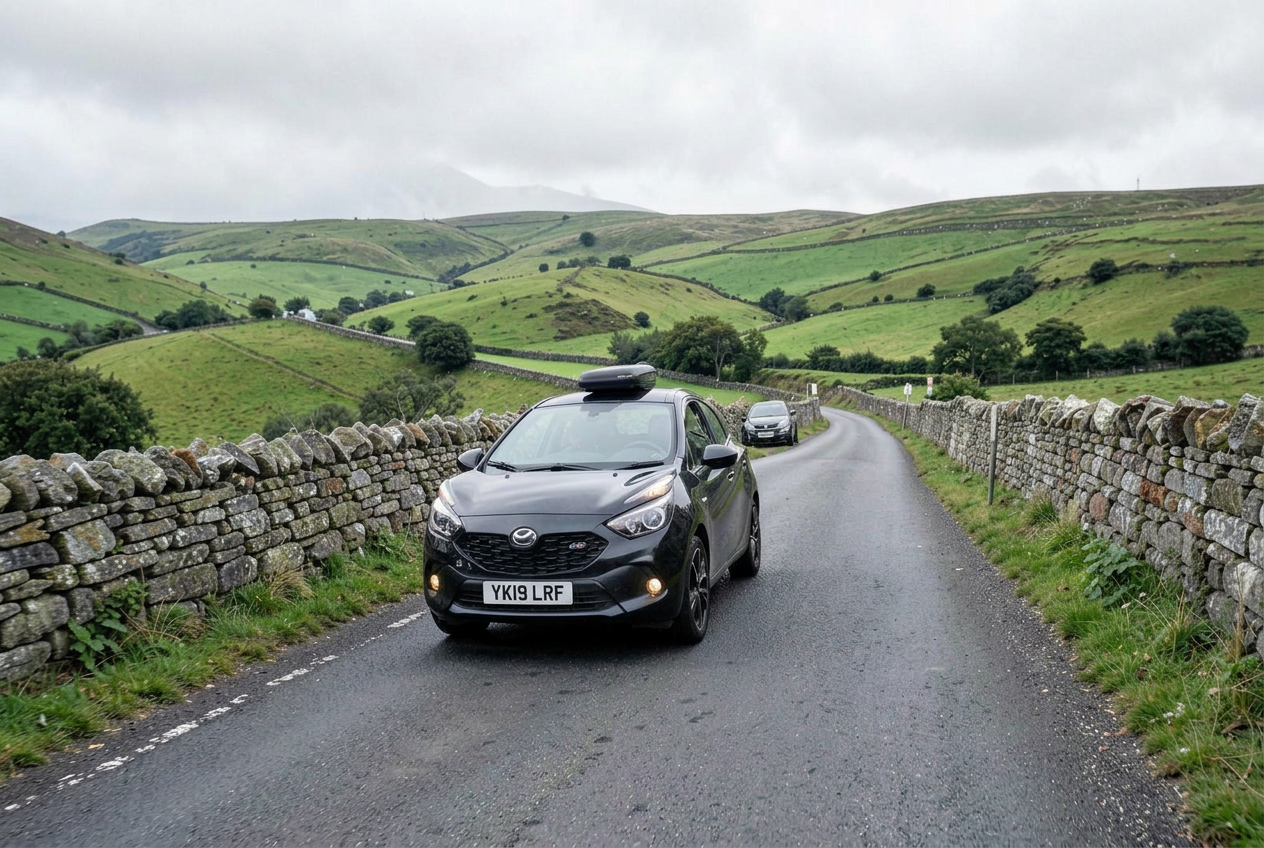
- Country lanes are narrower than the map suggests. In the Dales, Snowdonia or Cornwall, a compact car is genuinely the better choice.
- Speed limits are camera-enforced. A fixed penalty issued to a hire car is passed to the hirer along with the driver’s details.
The short version
Book early for airport collections and bank holidays, bring the card in the driver’s own name, decide on excess cover before you arrive rather than at the counter, and photograph the car at both ends of the hire. Do that and the desk becomes a five-minute stop instead of the first argument of the holiday.
Note: this article is advertising content. Rental conditions, deposits, excess amounts, minimum age, accepted payment methods and vehicle availability depend on the branch, the vehicle group and the individual agreement. Only the provider’s own terms apply. Prices and app features may change without notice.